
How to Fix a Water Damaged Phone
A water damaged phone needs calm triage. Speaker cleaner tones can help with trapped water in the speaker grille, but they are not a full water-damage repair.
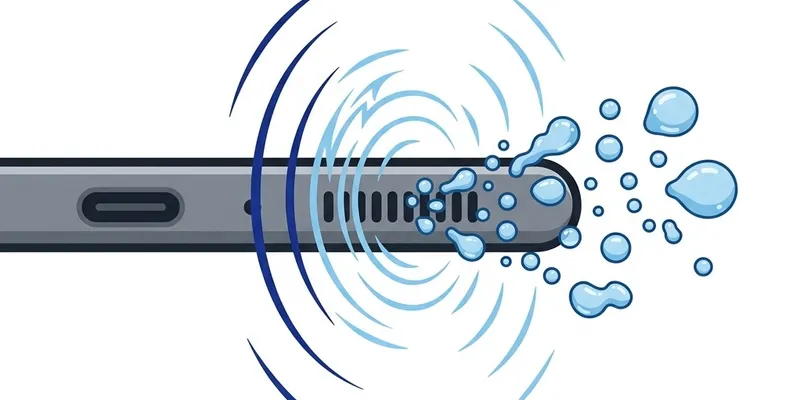
First Hour
Power the phone off if it was submerged or behaves strangely.
Remove the case, SIM tray if safe, and external accessories.
Dry the outside and keep openings pointed downward.
When to Use the Tool
Use water eject mode only if the phone powers normally and the issue is muffled speaker audio.
Do not run tones repeatedly on a hot, glitchy, or visibly wet device.
Seek repair support if the screen flickers, charging fails, cameras fog, or buttons stop responding.
What the Tool Cannot Do
It cannot reverse corrosion, dry liquid under the screen, or repair a damaged battery.
Think of the speaker cleaner as a targeted speaker-grille helper, not a full water-damage treatment.
The Rice Myth: Why It Does Not Work
Putting a wet phone in a bag of rice is the most widespread and least effective water damage remedy on the internet. The idea is that rice absorbs moisture from the air, and by extension, from the phone. In practice, rice absorbs ambient humidity at roughly the same rate as open air, and it cannot pull water out of sealed internal cavities where it actually causes damage—around flex cables, under shield cans on the logic board, and between display layers.
A 2024 study by a repair industry group tested rice against silica gel packets, cat litter, open air, and a fan-assisted drying setup. Rice performed no better than leaving the phone on a table in a dry room. The fan-assisted setup dried phones significantly faster because moving air accelerates evaporation, while rice just sits passively around the phone absorbing trace humidity.
Rice introduces its own problems. Raw rice grains produce starch dust and small fragments that can enter the charging port, headphone jack, and speaker grille. Once inside, starch dust mixes with any remaining moisture to form a sticky paste that hardens as it dries. Repair technicians regularly find rice starch residue packed into charging ports of phones that were stored in rice bags, and this residue is harder to remove than the original water damage.
Instead of rice, place the phone in a dry room with gentle airflow—a ceiling fan on low or a desk fan pointed near but not directly at the phone. If you have silica gel packets saved from shoe boxes or electronics packaging, seal the phone in a zip-lock bag with several packets. Silica gel is a genuine desiccant that actively pulls moisture from the air and can reduce drying time. But even without silica gel, time and dry airflow are the most effective and risk-free drying method available.
Insurance and Warranty Considerations
Apple's standard one-year limited warranty and AppleCare Plus without theft and loss coverage do not cover liquid damage. Every iPhone contains Liquid Contact Indicators—small white stickers that turn red when exposed to water—inside the SIM tray slot and near internal connectors. If a technician sees a triggered LCI during any repair, liquid damage may be noted on the device record even if the current issue is unrelated.
AppleCare Plus with Theft and Loss covers accidental damage, including water damage, with a service fee of 99 US dollars for iPhone screen damage or 149 US dollars for other accidental damage as of 2025 pricing. This is often cheaper than an out-of-warranty repair for a water-damaged logic board, which can cost 300 to 600 US dollars depending on the iPhone model.
Samsung Care Plus provides similar coverage for Galaxy devices, with a deductible that varies by device tier. Google's Preferred Care plan for Pixel phones also covers accidental damage including liquid exposure. In all cases, file the claim before attempting any third-party repair or opening the device yourself. Unauthorized disassembly is grounds for claim denial across all major manufacturer warranty programs.
If you do not have device insurance, check your credit card benefits. Many Visa Signature, Mastercard World Elite, and American Express cards include cell phone protection when you pay your monthly wireless bill with the card. Coverage limits are typically 600 to 800 US dollars per claim with a 25 to 50 dollar deductible. This benefit is frequently overlooked and can cover the full cost of a water damage repair or replacement device.